
How to Book Dubai Hotels & Flights With Crypto: The 2026 Traveler's Guide
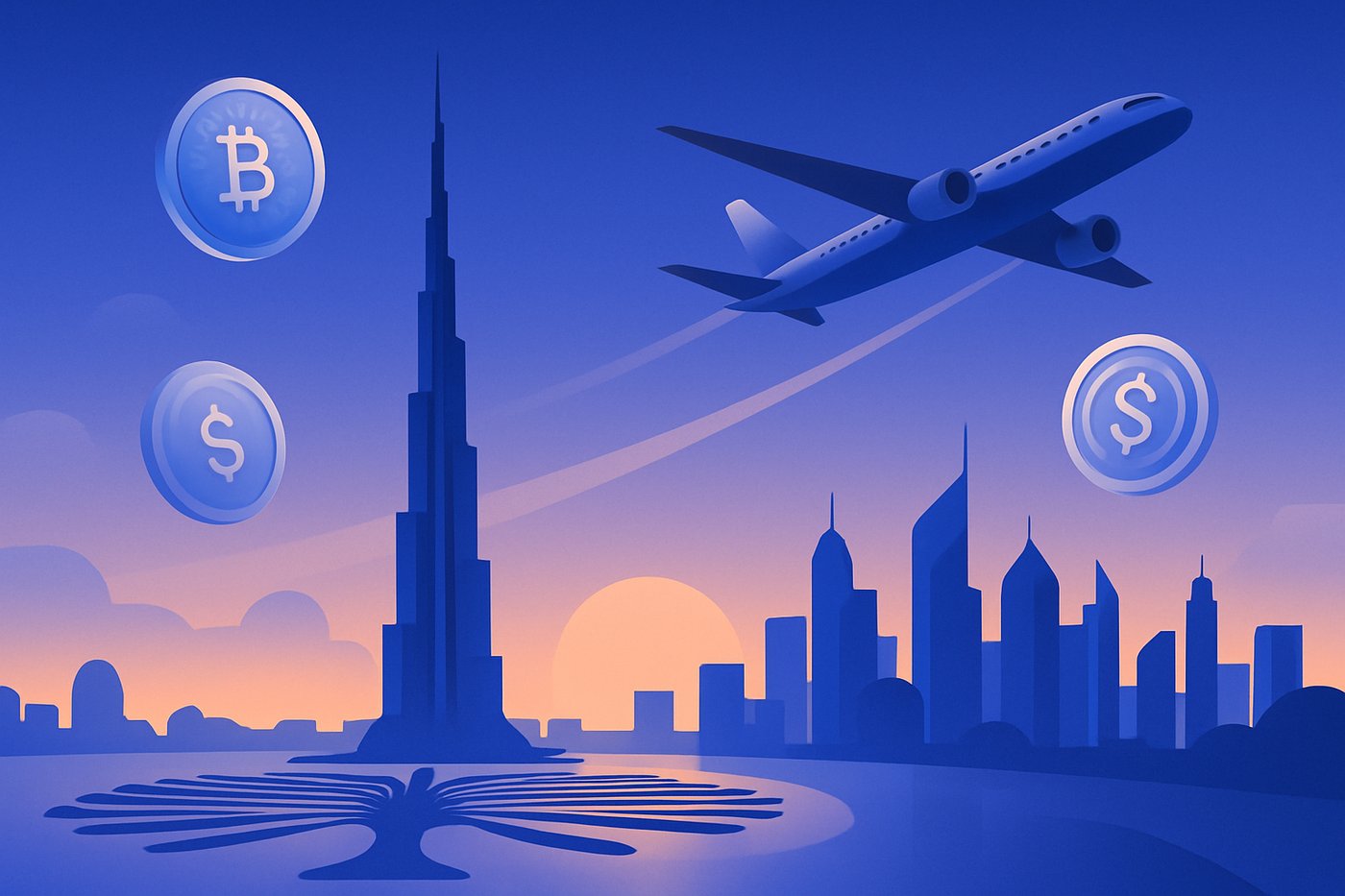
No city has leaned into digital assets like Dubai. It built the world's first dedicated crypto regulator, charges individuals zero tax on crypto gains, and welcomed a record 19.59 million international visitors in 2025 — many of them holding coins they'd rather spend than convert through a bank. This guide is the practical version: whether you can legally pay in crypto here (yes), how a hotel or flight payment actually works, which coins to use, what still needs a card at check-in, and where to base yourself. If you just want to start, you can [search Dubai hotels](/hotels?city=DXB) or [find a flight](/flights) and pay in Bitcoin, Ethereum or stablecoins on bitfares.
Is it legal to pay with crypto in Dubai in 2026?
Yes — with one nuance worth understanding. In Dubai you may legally own, buy, sell and spend cryptocurrency through licensed providers. What crypto is *not* is legal tender: only the UAE dirham (and the new Digital Dirham CBDC) can be demanded as payment. In practice that means a merchant chooses whether to accept crypto, and when they do, the amount is settled in dirhams behind the scenes.
The regulator behind this is VARA — the Virtual Assets Regulatory Authority, established in March 2022 under Dubai's Law No. 4 of 2022. It was the world's first government body dedicated solely to virtual assets, and it licenses everything from exchanges to custody to payments. By the end of 2025 VARA had issued its 50th licence, and the wider UAE hosts an estimated 1,800+ crypto companies. This is not a grey area — it is one of the most explicitly regulated crypto markets on earth.
Why Dubai is the world's crypto-travel capital
Three things make Dubai unusually friendly to a crypto-holding traveler. First, tax: the UAE levies no personal income tax and no capital-gains tax on individuals, so cashing out or spending crypto for personal travel isn't a taxable event locally (your home country may still tax it — see our crypto travel tax guide).
Second, adoption: surveys put UAE crypto ownership among the highest in the world — commonly cited between 25% and 30% of the population. Dubai's government signed an agreement in May 2025 to let residents pay government service fees in crypto (settled to dirhams), part of a strategy to make 90% of transactions cashless by 2026.
Third, momentum in travel specifically. In July 2025 Emirates signed an agreement with Crypto.com to add crypto payments, expected to go live during 2026, and Dubai Duty Free is part of the same deal. Dubai's tourism chief has publicly pushed hotels to accept crypto. The infrastructure is arriving fast — and aggregators already let you book today without waiting for each airline to catch up.
| Dubai 2025 in numbers | Figure |
|---|---|
| International overnight visitors | 19.59 million (record, +5% YoY) |
| Hotel occupancy | 80.7% across ~154,000 rooms |
| Estimated UAE crypto ownership | ~25–30% of the population |
| Personal tax on crypto gains | 0% |
| AED–USD exchange rate | Pegged at 3.6725 since 1997 |
How paying for a Dubai hotel or flight with crypto actually works
You have two routes. The first is direct: a small number of Dubai hotels take crypto at the property — the most-cited examples are Palazzo Versace Dubai and The Manor by JA. The catch is that direct acceptance is still rare and often requires booking a week ahead, so it's not something to rely on across a whole trip.
The second route — the one most travelers actually use — is a crypto-native travel platform that accepts coins for millions of hotels and flights and settles with the property in local currency. That's what bitfares does: you search a hotel or flight, pick your coin at checkout, send the exact amount shown, and your booking confirms once the payment is detected on-chain. No card, no bank FX, no waiting for a specific hotel to opt in.
Mechanically the flow is simple: choose your coin and network, scan the QR or copy the address, send the exact amount, and receive your confirmation. Bitcoin on-chain typically confirms in 10–30 minutes; stablecoins on fast chains land in seconds. If you're new to this, our step-by-step guide to paying for travel with crypto walks through every screen.
Which coin should you pay with in Dubai?
For most Dubai bookings, a stablecoin is the smart default. Because the dirham is pegged to the US dollar at a fixed 3.6725, a dollar-pegged coin like USDC or USDT tracks the local currency almost exactly — 100 USDC is about 367 AED, and it won't swing between the moment you book and the moment you arrive. That removes the one real downside of paying in crypto: volatility.
- USDC or USDT — dollar-stable, so your AED cost is predictable. Best all-round choice for a Dubai trip.
- Bitcoin (Lightning) — near-instant and cents in fees; ideal if you hold BTC and want to spend a slice of it.
- Ethereum, SOL, BNB, and more — fine to use; just be aware the fiat value can move before you send, so send promptly.
- Monero (XMR) — if privacy is the priority, see how to book travel privately with Monero.
The cheapest rails cost a fraction of a cent to a few dollars flat, regardless of booking size — we compare them in the cheapest way to pay for travel with crypto. On a AED 5,000 hotel stay, that's a meaningful saving over a card's 2–3% foreign-transaction fee.
What to still expect at check-in
Paying in crypto up front does not remove two normal hotel formalities. First, most Dubai hotels will still ask for a card (or cash) pre-authorisation for incidentals — the security hold that covers the minibar and room service. That's a hold, not a charge, and it's released after checkout.
Second, expect standard ID/KYC on the booking platform and a passport at the desk, exactly as with any booking. Paying in crypto changes how the room is funded, not the front-desk process. Bring a card for the incidentals hold and you're set.
Where to stay in Dubai (and how to match it to your trip)
Dubai's neighbourhoods are distinct enough that picking the right one matters more than the star rating. A quick orientation:
| Area | Best for | Vibe |
|---|---|---|
| Downtown / Business Bay | First-timers, Burj Khalifa & Dubai Mall | Central, iconic, walkable to the fountain |
| Dubai Marina / JBR | Beach + nightlife, walkable waterfront | Modern high-rises, busy, mid-to-high price |
| Palm Jumeirah | Resort luxury, honeymoons | Isolated, car needed, premium |
| Deira / Bur Dubai | Budget, old-Dubai souks, metro access | Historic, best value, less polished |
On timing: November to March is peak season with 20–25°C days and the highest prices; June to August hits 40°C+ but is when hotels and flights are cheapest. April and October are the sweet-spot shoulder months. You can compare live options any time by searching Dubai stays.
Entry is easy for most travelers: US, UK, Canadian, Australian and Japanese passport holders get a free 30-day visa on arrival, and most EU nationals up to 90 days. Always carry six months of passport validity.
Booking a Dubai trip with crypto, start to finish
Put together, a crypto-paid Dubai trip looks like this: search a flight to DXB and pay in a stablecoin so the fare is locked; book a hotel in the area that fits your trip and pay the same way; keep a card free for the incidentals hold; and enjoy a city that has, more than anywhere, built itself around the way you want to pay.
For deeper dives, see which airlines and platforms accept crypto in 2026 and, if you're new, the complete beginner's guide to paying for travel with crypto.
Frequently asked questions
Is it legal to pay with crypto in Dubai in 2026?
Yes. You can legally own and spend crypto through licensed providers in Dubai, regulated by VARA. Crypto isn't legal tender — only the dirham is — so merchants choose to accept it and settle in AED, but paying for a hotel or flight in crypto is entirely legal and common.
Which Dubai hotels accept Bitcoin directly?
Only a handful accept crypto at the property — Palazzo Versace Dubai and The Manor by JA are the most-cited. Most travelers instead use a crypto travel platform like bitfares, which accepts coins for millions of hotels and pays the property in local currency.
Can I book an Emirates flight with crypto?
Emirates signed an agreement with Crypto.com in July 2025 to add crypto payments, expected to launch during 2026. In the meantime you can book flights to Dubai with crypto today through a crypto-native platform rather than waiting for each airline's own integration.
Do I pay tax on crypto I spend in Dubai?
The UAE charges individuals no personal income or capital-gains tax, so spending crypto for personal travel isn't taxed locally. Your home country may still treat spending crypto as a taxable disposal — check our crypto travel tax guide.
Which crypto is best to pay with in Dubai?
A dollar-pegged stablecoin (USDC or USDT) is the smart default, because the dirham is pegged to the US dollar — so your AED cost is predictable and won't swing before check-in. Bitcoin over Lightning is a great low-fee option if you hold BTC.
Will I still need a credit card if I pay in crypto?
Usually yes, for the incidentals hold — the refundable pre-authorisation hotels place for minibar and room service. The room itself can be fully prepaid in crypto; the card is only for that security hold.
Ready to travel on crypto?
Search real flights and hotels and pay in Bitcoin, Lightning, USDC, USDT and more.