
How to Pay for Travel With Crypto: A Complete Step-by-Step Guide (2026)
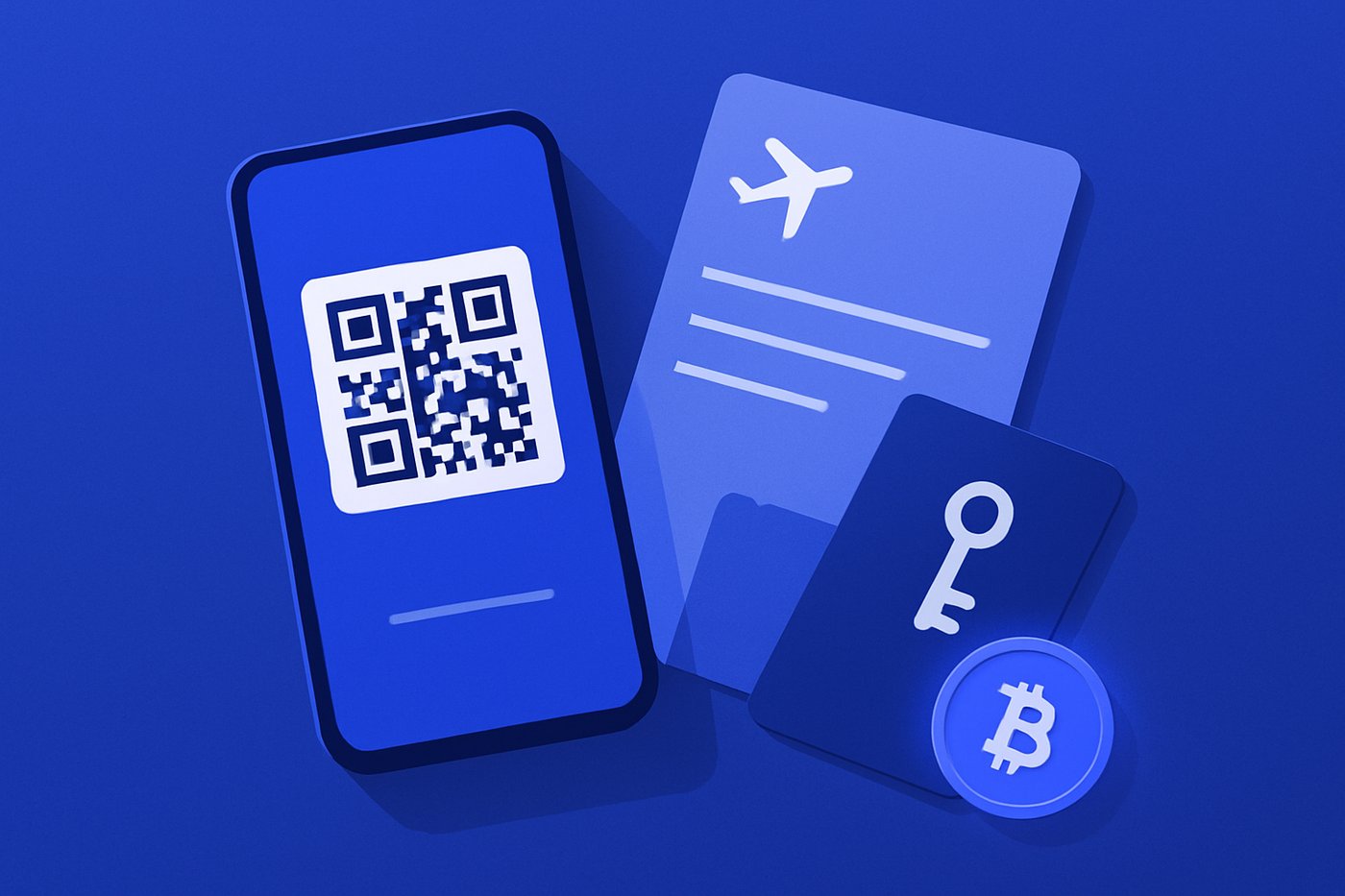
Crypto travel has quietly stopped being a novelty. The market for cryptocurrency travel payments was worth about $1.2 billion in 2024 and is forecast to reach $8.7 billion by 2033 — a ~24.6% compound growth rate — while over 659 million people worldwide now hold crypto. If you're one of them, paying for a trip directly in digital assets can be cheaper and cleaner than routing money through a bank first. This guide is the complete, beginner-friendly version: the five steps, which coin to use, what the fees really are in 2026, and the handful of mistakes worth avoiding. When you're ready, you can [search flights](/flights) or [find a hotel](/hotels) and follow along.
The five-step version (read this first)
Booking travel with crypto is genuinely five steps. Everything else in this guide is detail on how to do each one well.
- 1. Have a wallet with crypto in it — a self-custody app like a mobile wallet, or an exchange account you can withdraw from.
- 2. Search your flight or hotel on a platform that accepts crypto, and go to checkout.
- 3. Pick your coin and network — the payment page shows an exact amount and an address or QR code.
- 4. Send the exact amount from your wallet, choosing the matching network.
- 5. Wait for confirmation — seconds on fast chains, 10–30 minutes for on-chain Bitcoin — and your e-ticket or voucher is issued.
Step 1: Choose a wallet and fund it
You pay from a wallet, and there are two kinds. A custodial wallet is an account on an exchange (Coinbase, Binance, Kraken) where the company holds the keys — easy to start, but you're trusting a third party. A non-custodial wallet (a mobile app, browser extension or hardware device) puts you in sole control of the keys. Either works for booking travel; non-custodial gives you full control and privacy.
To fund it, you either buy crypto on an exchange and (optionally) withdraw to your own wallet, or buy directly inside a wallet app via an on-ramp. If you already hold crypto, you're ready. If you're buying specifically to travel, a stablecoin (USDC or USDT) is the easiest starting point because its value is predictable — more on that below.
Step 2 & 3: Search, checkout, and pick your coin
On a crypto-native travel site the search is identical to any other — pick your route or city and dates. The difference appears at checkout: instead of a card form, you choose a cryptocurrency and network. The page then shows a payment address, a QR code, and the exact amount to send, with the fiat price locked to that crypto figure.
This is where you decide which coin to pay with. The choice comes down to two things you care about — price stability and network fee — and they point in a clear direction for most people.
| Coin / rail | Typical fee to send | Confirmation time | Best for |
|---|---|---|---|
| USDC on Solana | under $0.01 | ~1 second | Cheap, fast, dollar-stable |
| USDC on Base | ~$0.001–$0.05 | ~2 seconds | Cheap, dollar-stable |
| Bitcoin (Lightning) | ~$0.01, often sub-cent | instant | Spending BTC, tiny fees |
| USDT on Tron (TRC-20) | ~$0.20–$5 flat | ~3 seconds | Widely held stablecoin |
| Bitcoin (on-chain) | ~$0.50–$5 (varies) | 10–30 min | Large BTC payments |
| Monero (XMR) | cents | ~20 min | Privacy |
Notice the fees are flat, not a percentage — sending $150 or $5,000 costs roughly the same, which is exactly why crypto beats cards on bigger bookings. We go deeper in the cheapest way to pay for travel with crypto.
Step 4 & 5: Send the exact amount, then get confirmed
Open your wallet, paste the address (or scan the QR), enter the exact amount shown, and — critically — select the same network the checkout specified. Send it. The travel platform watches the blockchain for your payment; once it has enough confirmations, your booking flips to confirmed and your ticket or voucher is issued, usually by email.
On fast chains this takes seconds. On-chain Bitcoin takes a few blocks (10–30 minutes), during which a good platform holds your booking. That's the entire transaction — no card number, no bank, no foreign-exchange desk in the middle.
Stablecoins vs volatile coins: the one decision that matters most
The single most important choice for a nervous first-timer is stablecoin or not. Stablecoins like USDC and USDT are pegged 1:1 to the US dollar, so 200 USDC is about $200 today, tomorrow, and on the day you fly. They remove the fear that your coin drops 8% between booking and boarding.
Volatile coins (BTC, ETH, SOL) are perfectly fine to pay with — the amount is locked the moment you check out — but their dollar value can move while the payment is pending, so send promptly. If you're paying to *avoid* volatility, use a stablecoin. We cover this fully in paying for flights and hotels with stablecoins.
What about refunds, taxes and privacy?
Three fair questions before you commit real money:
- Refunds: crypto has no card-style chargeback, so refunds are issued by the travel provider as a fresh transaction to your wallet under its cancellation policy. Understand it before booking — see crypto travel refunds explained.
- Taxes: in the US, UK and much of the EU, *spending* crypto can be a taxable disposal. Stablecoins usually mean little or no gain. Details in our crypto travel tax guide.
- Privacy: paying in crypto avoids handing card data to a chain of intermediaries; for maximum privacy, Monero is purpose-built.
And on trust: only pay through an established platform, never a stranger asking you to send coins over WhatsApp — the reasons are in is it safe to book travel with crypto.
Common beginner mistakes (and how to dodge them)
- Wrong network. Sending USDC on the wrong chain, or to a network the site didn't specify, can lose the funds. Always match the network shown.
- Underpaying. Send the exact amount; a partial payment won't confirm the booking. Account for your wallet's own send fee separately.
- Forgetting the memo/tag. A few coins (XRP, XLM) need a destination tag or the payment can't be credited. If the page shows one, include it.
- Sitting on the checkout page. Crypto prices and quotes refresh; don't leave a payment screen open for an hour and then send.
- Paying a volatile coin when you wanted certainty. If price predictability matters, use a stablecoin from the start.
Ready to try it
The best way to learn is a small real booking. Search a flight or book a hotel, choose a stablecoin at checkout, and watch the whole thing settle in seconds. Once you've done it once, paying for travel with crypto stops feeling technical and starts feeling like the obvious way to move money across borders — flat fees, no bank markup, and confirmation in your inbox.
Frequently asked questions
How do I pay for a flight or hotel with crypto?
Search on a platform that accepts crypto, go to checkout, choose your coin and network, and send the exact amount to the address or QR code shown. Once the payment confirms on-chain — seconds on fast chains, 10–30 minutes for Bitcoin — your ticket or voucher is issued.
Which cryptocurrency is best for booking travel?
For most people a dollar-pegged stablecoin (USDC or USDT) is best because the price is predictable and fees are tiny. Bitcoin over the Lightning Network is excellent if you hold BTC and want near-instant, sub-cent fees.
Is paying for travel with crypto cheaper than a card?
Often, yes — crypto network fees are flat (cents to a few dollars) rather than a percentage, so on larger bookings they beat a card's typical 1–3% foreign-transaction fee. You do pay a small on-ramp spread when you first buy crypto.
What happens if I send the wrong amount or use the wrong network?
Underpaying means the booking won't confirm until the balance is sent; sending on the wrong network can lose the funds entirely. Always send the exact amount on the exact network the checkout specifies, and include any memo/tag shown.
Can I get a refund if I paid with crypto?
Yes, but not via a chargeback. The travel provider issues a refund as a new transaction to your wallet, following its cancellation policy. With a stablecoin the refunded amount matches what you paid; with a volatile coin its value may have moved.
Do I need a special wallet to book travel with crypto?
No — any standard crypto wallet works, custodial (an exchange account) or non-custodial (your own app or hardware device). You just need the coin and the ability to send it to the address the checkout shows.
Ready to travel on crypto?
Search real flights and hotels and pay in Bitcoin, Lightning, USDC, USDT and more.